News
This year’s results in textile industry reviewed and priority tasks for the future set
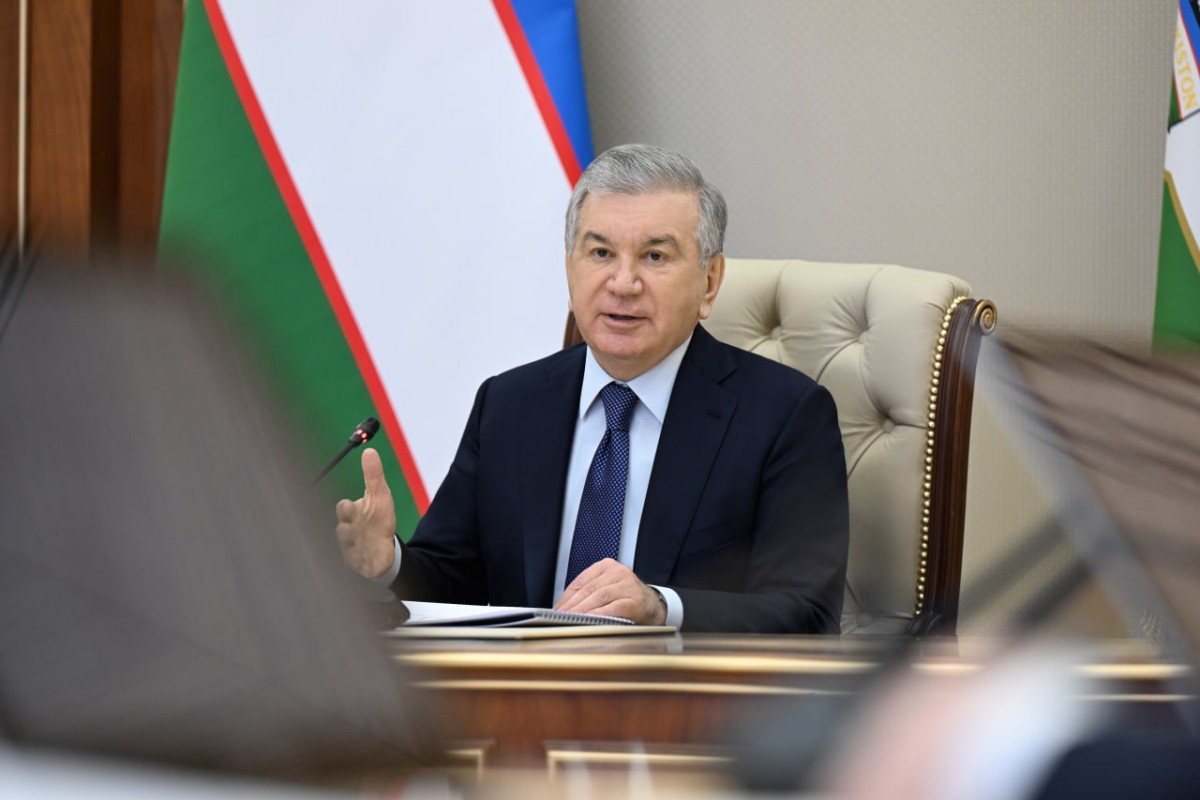
On December 23, President Shavkat Mirziyoyev was briefed on the presentation about the results of 2025 and the priority tasks for the next year in the textile industry.
The results achieved during the year, the growth dynamics of production and export indicators in the industry, as well as plans for 2026 were reviewed.
It was noted that in 2025, the production volume in the textile industry amounted to 134 trillion soums. The amount of utilized foreign investments reached $2.1 billion. Exports increased compared to the previous year, reaching a volume of $2.5 billion. The number of people employed in this industry reached 623 thousand. It was noted that there is an opportunity to increase this figure to 650 thousand next year.
In 2026, plans include further deepening of cotton fiber processing and increasing the level of capacity utilization for the production of fabrics, knitwear, and finished goods. A goal has been set to bring the production volume to 147 trillion soums and exports to $3.3 billion.
It is planned to attract $2.2 billion of foreign investment into the industry. As a result, additional capacities will be created for the production of 207 thousand tons of synthetic and blended yarn, 397 million square meters of fabrics, 224 million units of garments and knitwear, as well as for dyeing 108 million square meters of textiles.
At the same time, certain factors constraining the industry's sustainable development were also noted. Specifically, pressing issues in the industry were identified, such as covering part of the demand for cotton fiber through imports, the high cost of financial resources, growing logistics expenses in foreign markets, and a shortage of qualified specialists in certain areas.
To address these problems, specific measures have been developed for 2026. In particular, it is planned to provide enterprises with $200 million in concessional loans to replenish their working capital, carry out the financial rehabilitation of 138 enterprises, and engage 100 new enterprises in export activities.
Particular attention will be paid to the implementation of international standards and certificates. The "Better Work," "BCI," "FWF," and "Organic EU" programs will be implemented at 60 enterprises, and international financial reporting standards will be introduced at another 15 enterprises. Furthermore, a modern textile laboratory will be established, capable of analyzing the quality of finished products in 24 areas.
Through the implementation of ERP systems and artificial intelligence technologies, it is planned to accelerate digitalization and enhance production efficiency in the industry. This process will cover 40 enterprises.
As part of expanding international cooperation, plans have been developed to strengthen interaction with international sourcing companies and major brands, participate in marketing research and international exhibitions, and stimulate the relocation of foreign enterprises.
Approving the proposed approaches, the Head of our state set specific tasks for the responsible officials to consistently increase the share of finished goods, reduce their production cost, and fully utilize the investment and export potential of the light industry. It was emphasized that all measures taken should contribute to transforming the industry into a sustainable and competitive system producing high-value-added products.
Source
